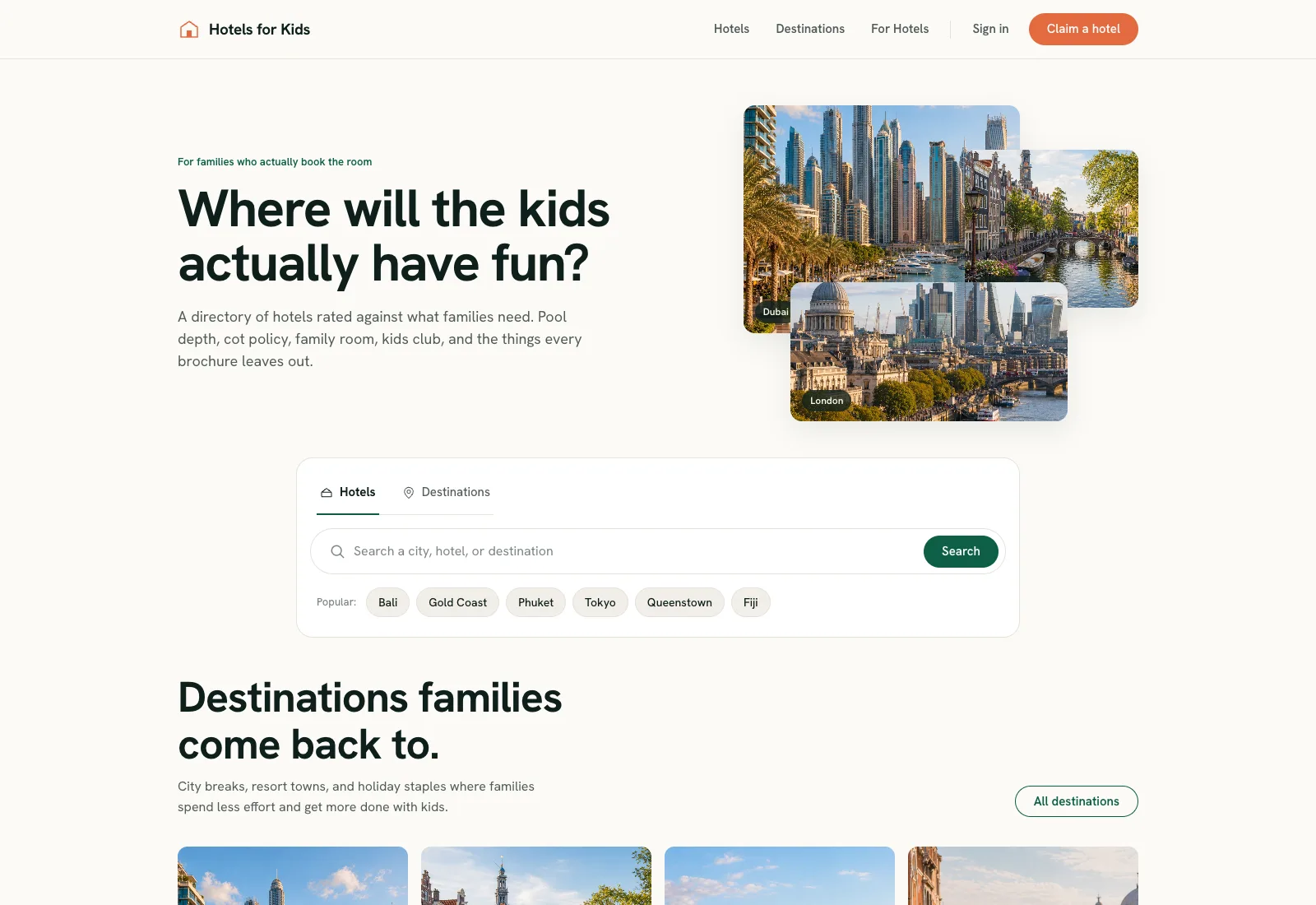
Hotels for Kids is an independent, Australian-made directory that rates hotels on family-fit, not star rating. Every stay is scored across five family pillars and broken down into the practical detail parents actually book against: pool depth, cot policy, family rooms, food flexibility and how easy the location is with young kids.
The problem
Booking a hotel as a parent is a different job to booking one for yourself. The questions that decide whether a stay works (how deep the pool is, whether a cot is free or charged, if the family room really sleeps five, whether the kitchen will do anything beyond chips) are the exact details hotel marketing skips and review sites bury. Parents end up cross-checking the hotel website, a booking engine and a dozen forum threads, then still arrive unsure whether the place suits a toddler or a teenager.
What we built
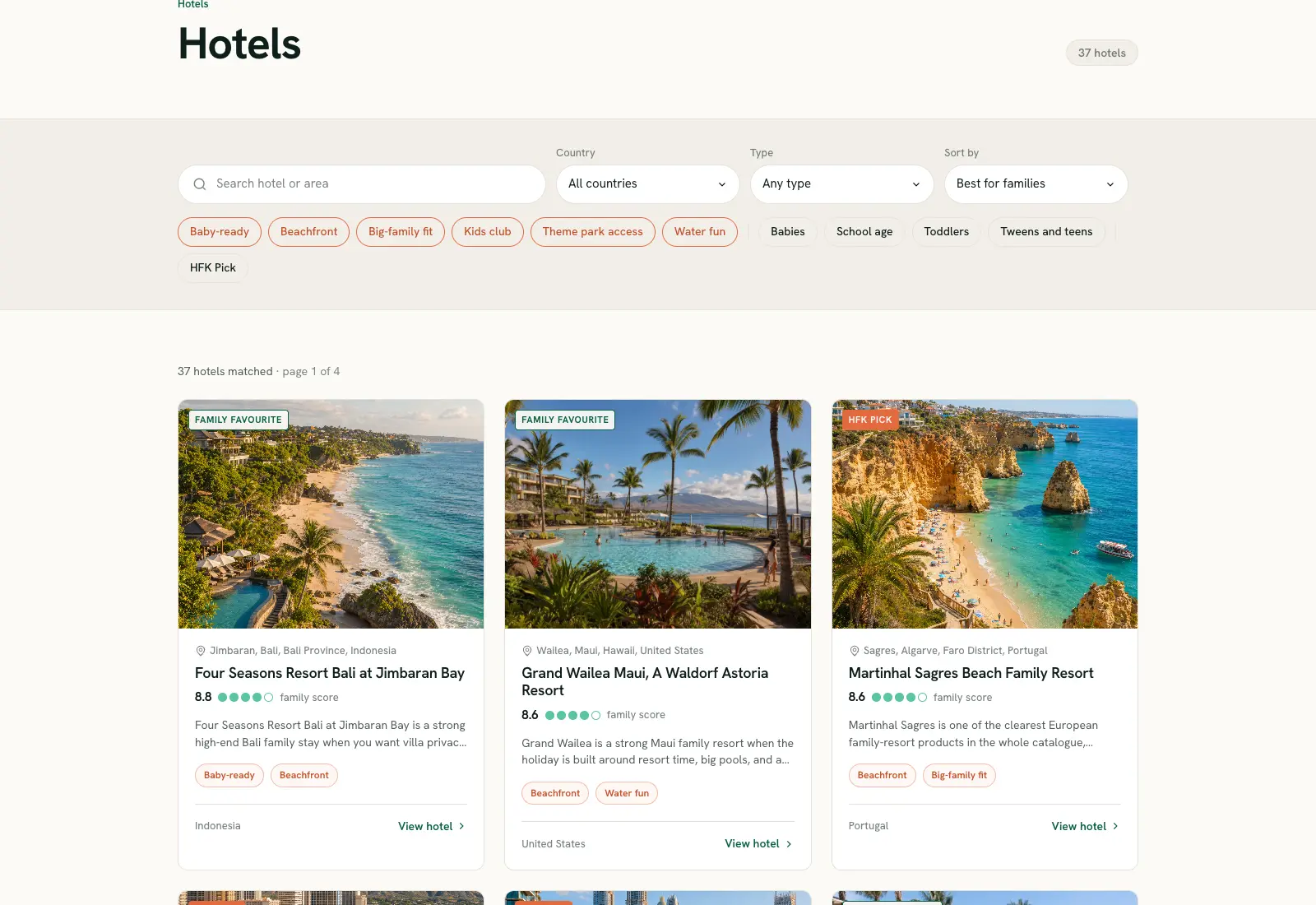
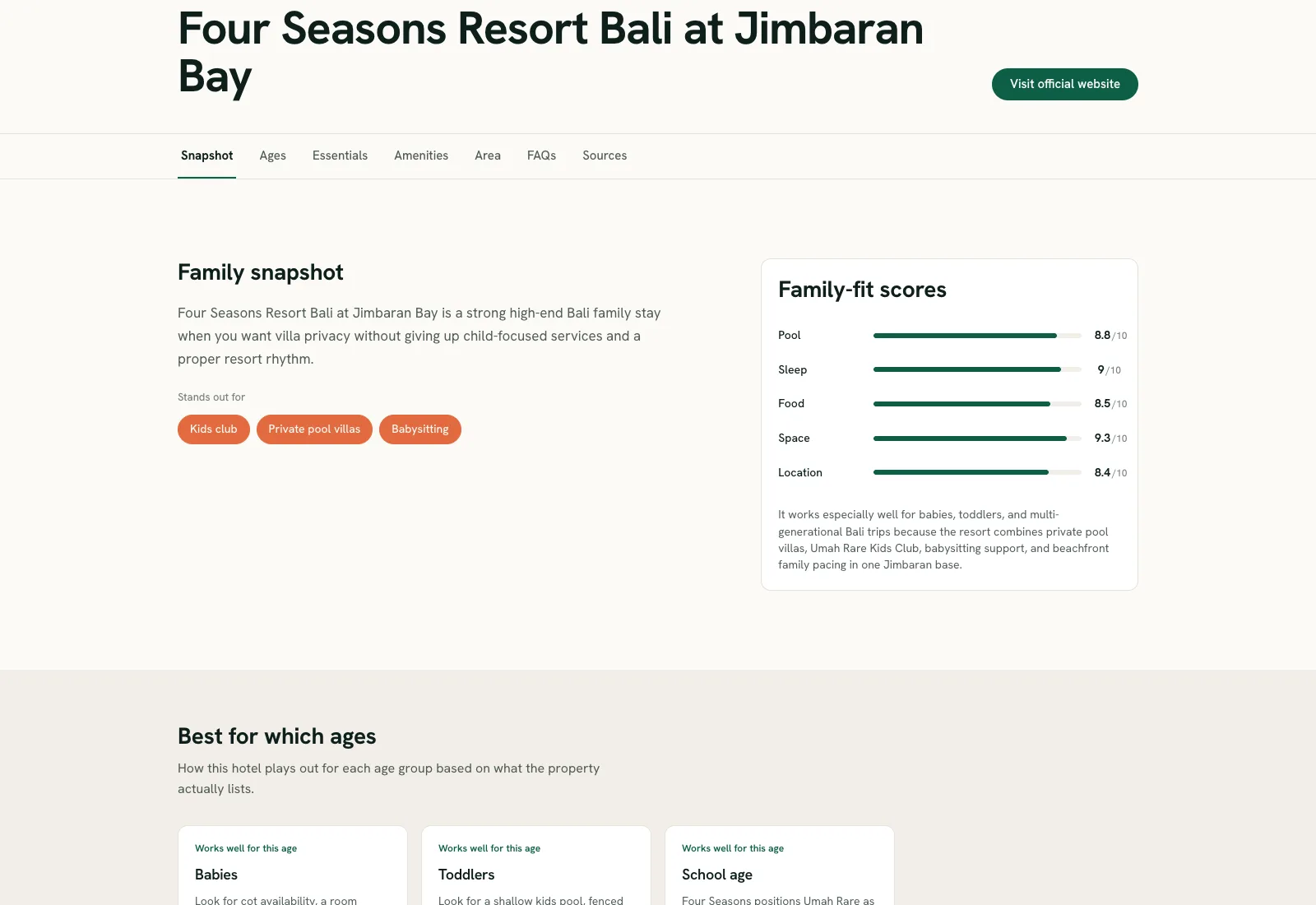
Hotels for Kids rates stays against what families actually need. Every hotel is scored across five family pillars and broken down into the practical detail parents hunt for: pool depth and shallow zones, cot and blackout setup, meal flexibility, room layouts for larger families, and how easy the location is with young kids. Parents can browse by family setup, filter by country, stay type, age group or an individual pillar score, and compare nearby areas before locking in a base. A two-sided model lets hotels claim and correct their own listing, with paid placement kept separate from the family-fit score.
The scoring and evidence model
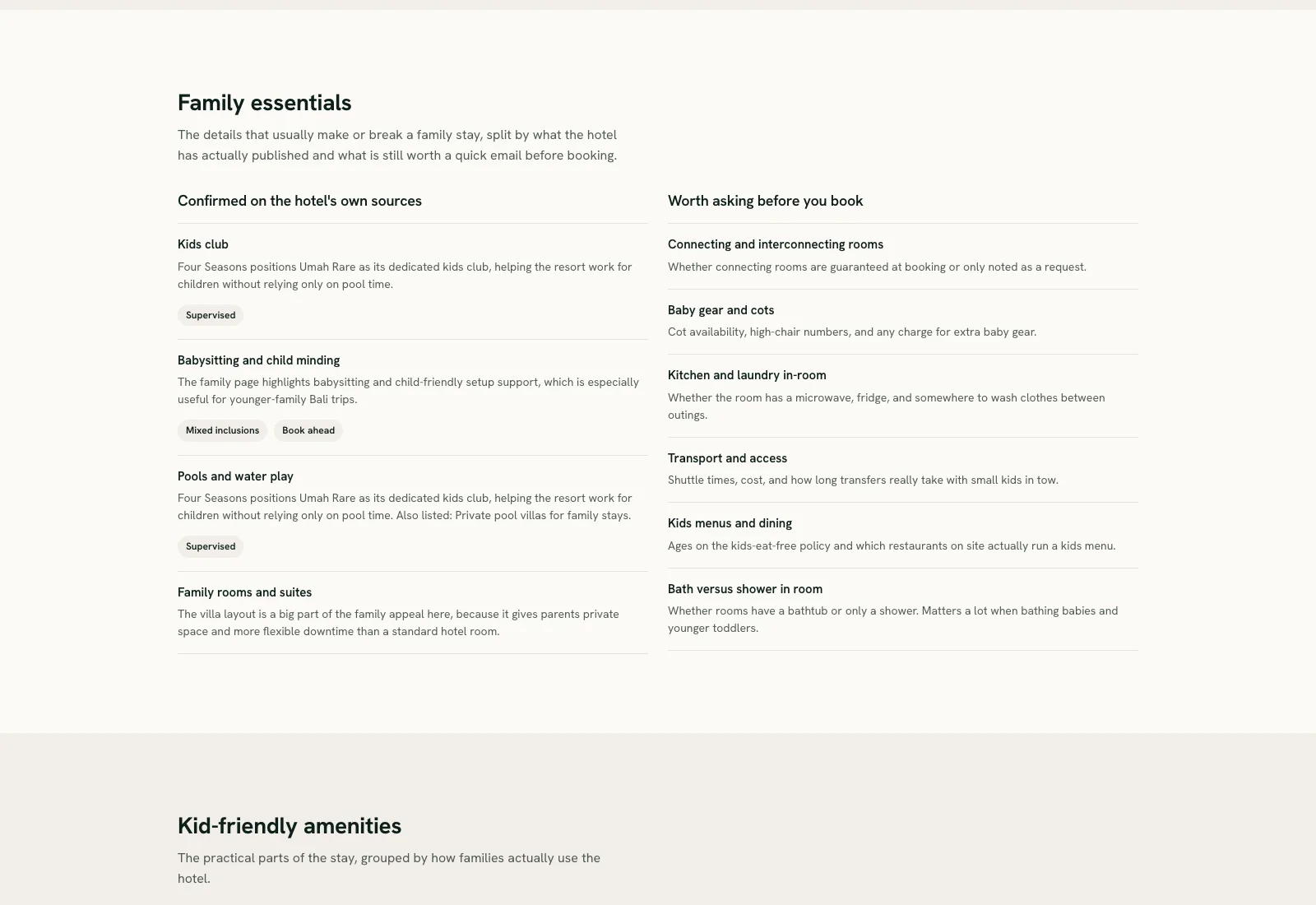
Each stay carries a family score built from five checks: water, sleep, food, space and location. Behind it sits a content pipeline that uses Anthropic's AI models to classify and parse rich content from across the web, so a hotel's family-fit is judged on what families actually report and not only on what the brochure claims. The model reads long hotel pages and wider signals about how a stay performs with children, then turns them into structured, scannable detail. On the page, every amenity is still split into what the hotel has published on its own sources and what is worth an email before booking, each listing carrying a last-checked date and links back to the source, so parents can see the evidence as well as the score.
Why it matters
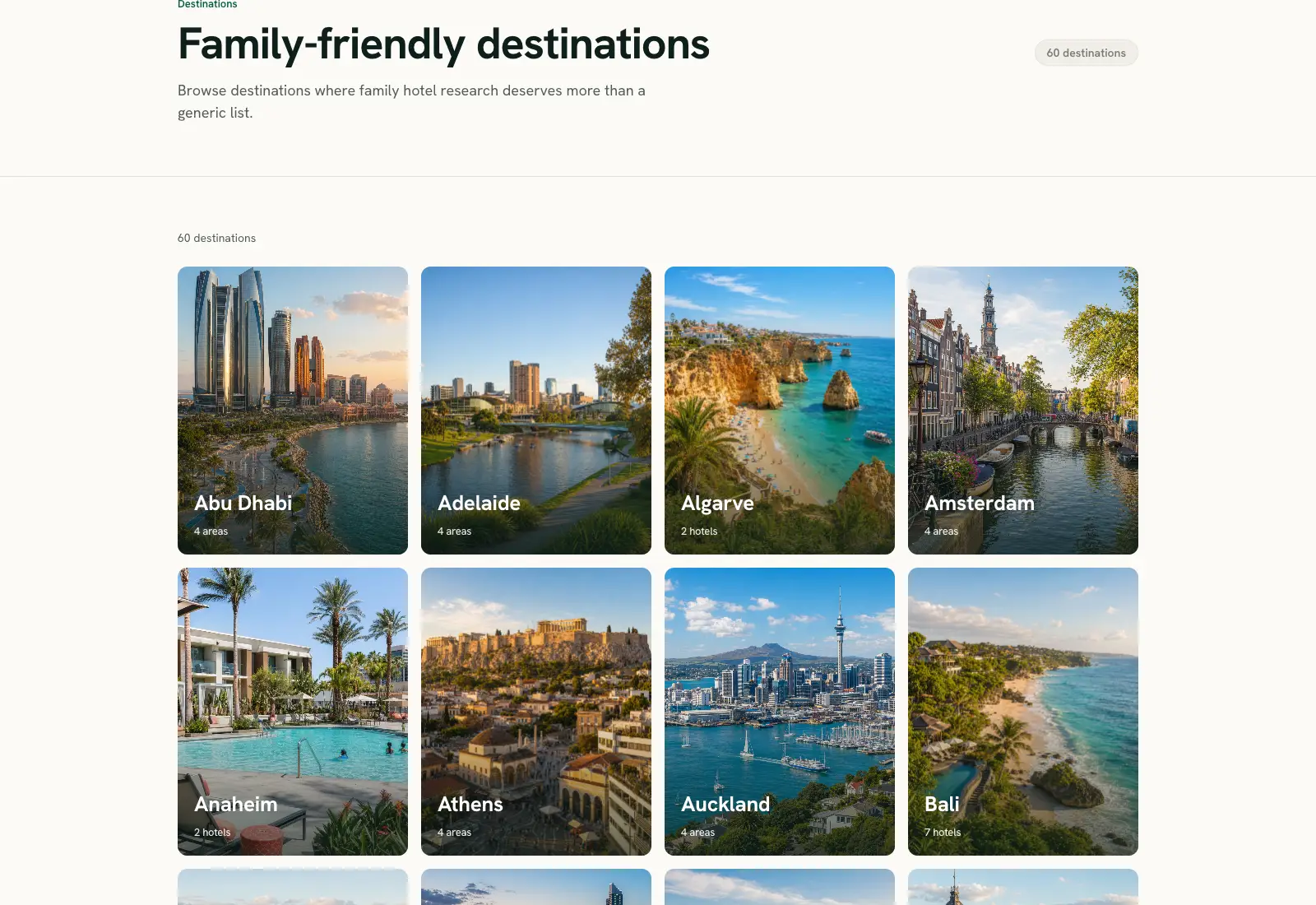
The product covers more than 60 family destinations, from Bali and the Gold Coast to Orlando, Dubai and Tokyo, with destination and area guides that help parents choose the right base and not just the right hotel. It is independent and Australian-made, with family-fit scores kept separate from paid placement, so a parent can see why a stay is marked as a family fit before booking the room.
Build notes
- A five-pillar family score (water, sleep, food, space and location) behind every hotel, so a stay is rated on the detail parents care about rather than a generic star count.
- Anthropic AI models classify and parse rich content from across the web, so family-fit reflects what families actually report and not only what the brochure or hotel website claims.
- Amenities split into what the hotel has actually published and what is still worth asking before booking, each listing carrying a last-checked date and links back to the hotel's own sources.
- Browse by family setup (splash-friendly, toddler-easy, big-family fit, baby-ready) and filter by country, stay type, age group or a single pillar score.
- Age-group fit for babies, toddlers, school age and teens, plus area guides that compare nearby bases before a parent commits to one.
- More than 60 family destinations covered, from Bali and the Gold Coast to Orlando, Dubai and Tokyo.
- A two-sided model where hotels can claim and correct a listing, with paid placement kept separate from the family-fit score.