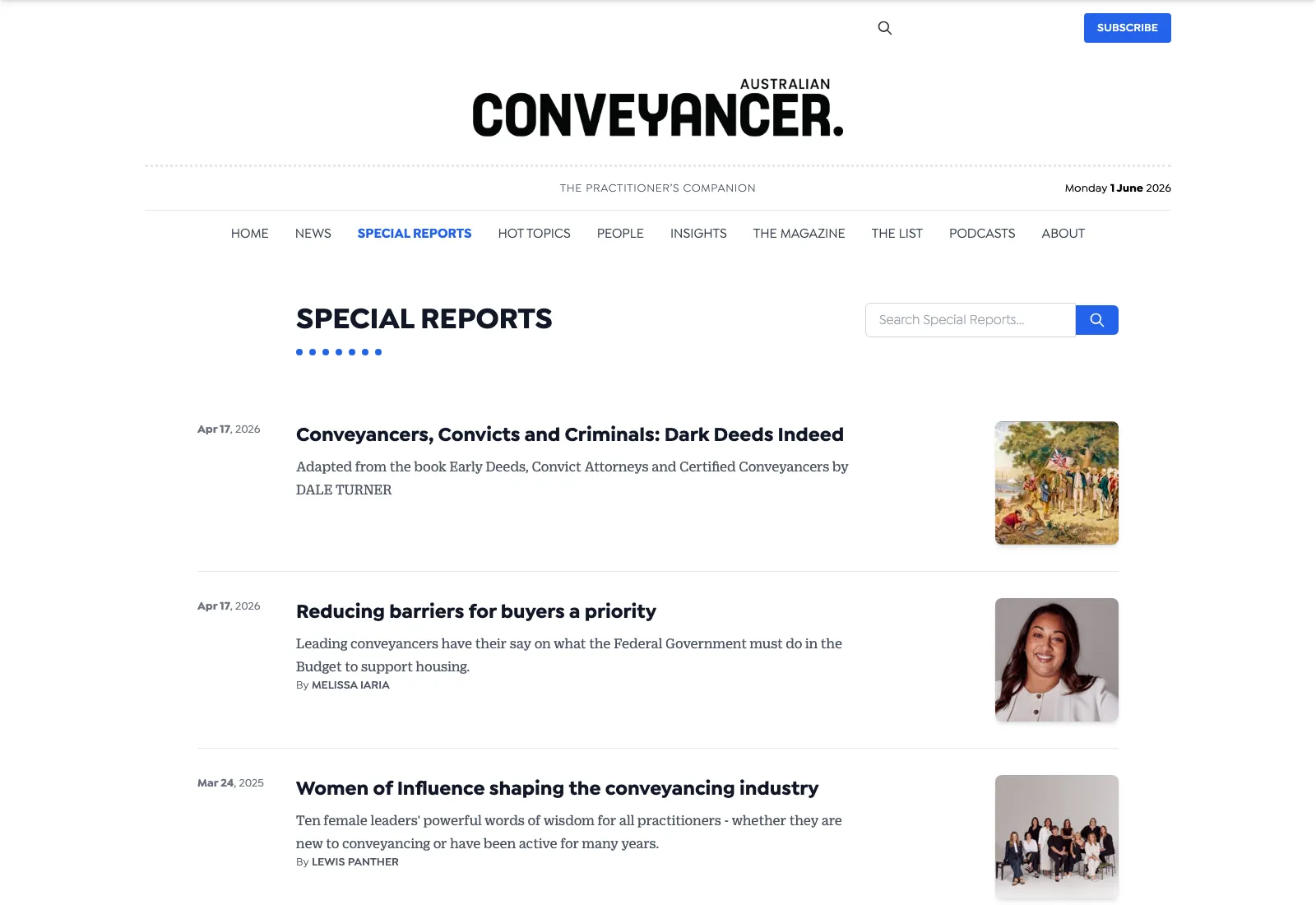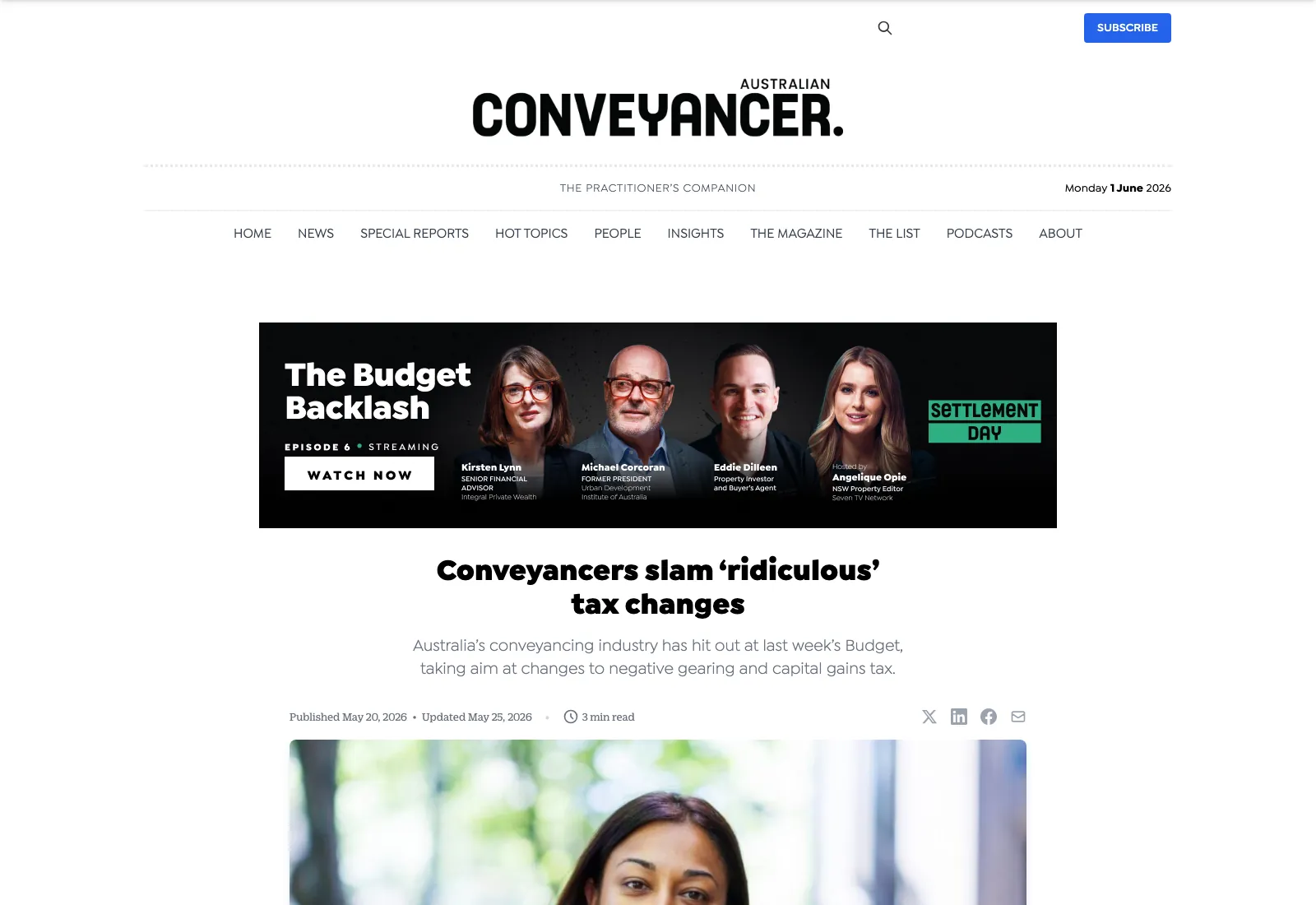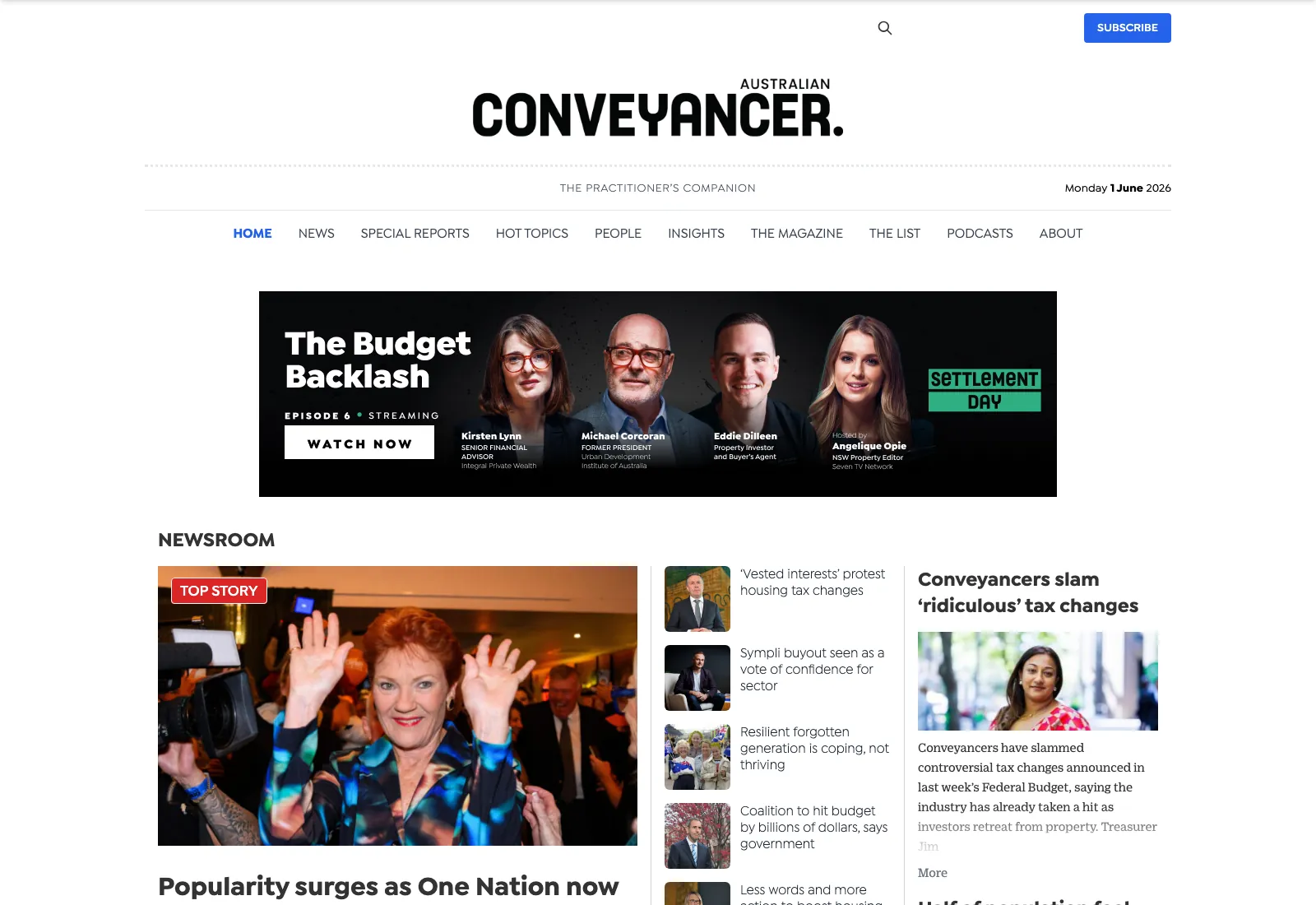
Australian Conveyancer is a long-running industry magazine that wanted to publish timely conveyancing content daily instead of waiting for the next print issue. The client supplied the designs, carried across from the print brand, and we handled the development: a WordPress build with security in mind, made alongside their internal IT team and grown in stages.
The problem
Australian Conveyancer had built its name in print, but the print cycle was the bottleneck. Conveyancing moves with legislation, court decisions and market shifts, and a story that mattered this week could not wait for the next issue to reach readers. They wanted a web publication that let them publish daily, matched the magazine rather than a generic template, and could grow well beyond a single title over time. The client had the brand and the designs in hand; what they needed was the build.
What we built
We took the client's designs and developed them into the site, holding a consistent look from the masthead through every section. We built it on WordPress for a practical reason: the editorial team needed to publish daily without a developer in the loop, and many of them already knew the WordPress editor, so the publishing interface was familiar from day one. The build was kept deliberately lean, with little to no plugin or third-party code, so security did not depend on a stack of external add-ons. The site then grew in stages: the publication first, followed by a jobs directory, a podcast platform and further sections.
Working with their IT team
Australian Conveyancer had strict internal guidelines, and we built to them rather than around them. We worked alongside the client's internal IT team on data sovereignty, file and folder permissions, and where content was allowed to live, so the site fitted their governance instead of forcing an exception to it. That cooperation shaped the lean, low-dependency build from the start.
Why it matters
Australian Conveyancer now has a durable web presence the team can keep extending and publish to daily, with a consistent look from print to web and a lean WordPress build that is easier to maintain and harder to compromise. Staging the work meant each part could ship and prove itself before the next was added.
Build notes
- Client-supplied designs developed into a consistent WordPress site, from the publication through to its later sections.
- Built on WordPress with little to no plugin or third-party dependency, a deliberate choice made with security in mind.
- Delivered in stages: the publication first, then a jobs directory, a podcast platform and more.