Aurelia is a long-running open-source JavaScript framework, and aurelia.io is its front door: the page a developer reads before deciding whether to try it. We rebuilt that site to look like the framework it represents, hold the search ranking the old site had built over years, load fast, meet accessibility standards, and stay safe and simple for the team to keep current. It is built with Aurelia 2 itself and prerendered, so search engines and first paint both get a complete page.
The brief
Aurelia is an established open-source framework with years of history, an existing audience and a search presence to match. The website is where most of that audience forms a first impression, so the rebuild had a tight set of constraints: it had to look on-brand for Aurelia, keep the ranking the old site had built up, load fast, meet accessibility standards, and stay safe and easy for the team to update. A redesign that looked good but quietly lost the search position would have failed.
On brand for Aurelia
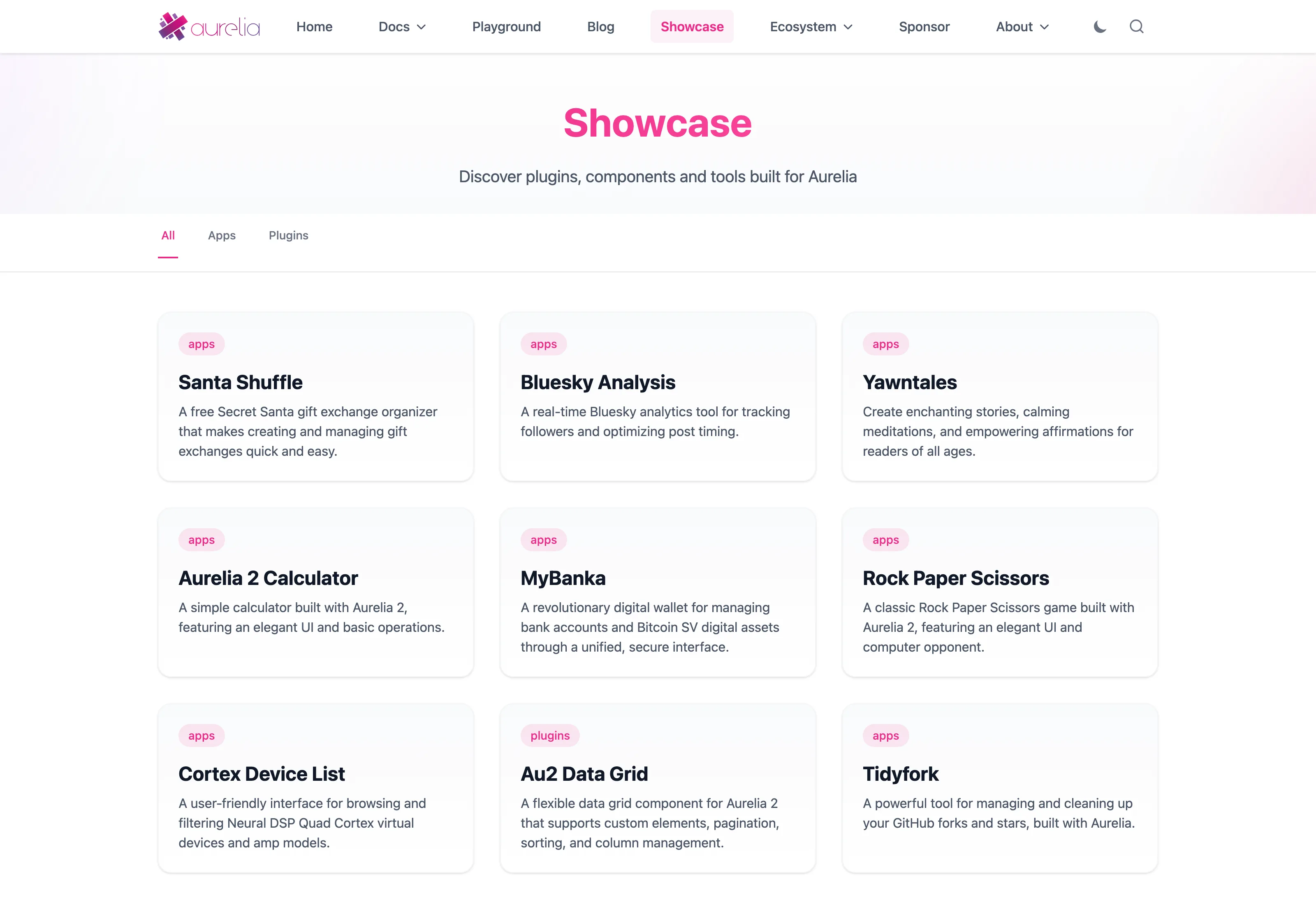
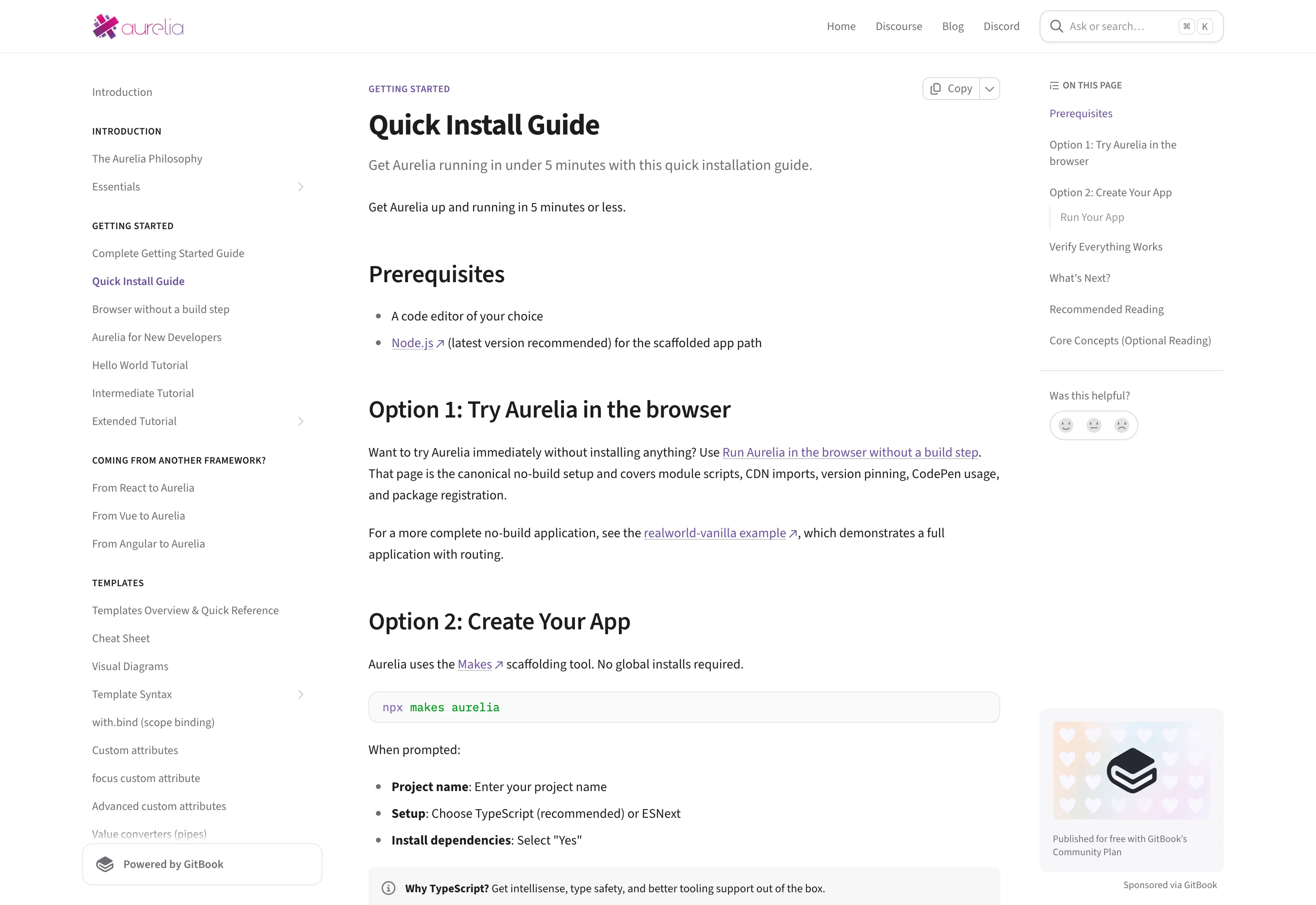
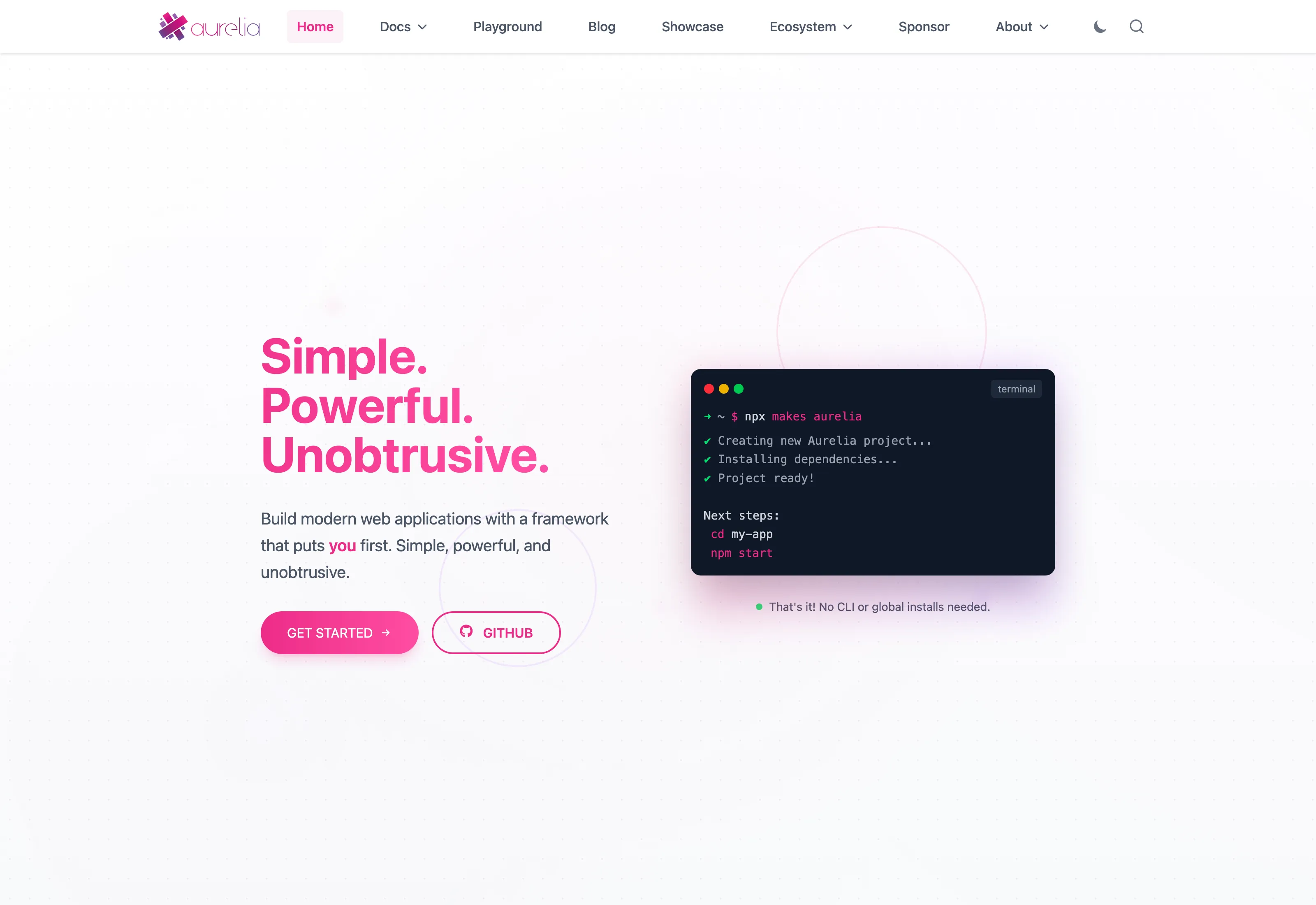
We carried the Aurelia identity across the site: the mark, the brand colour and the framework's own voice, including the short, declarative three-word tagline the project is known for. Home, showcase, blog and the entry to the documentation share one consistent look, so the site reads as the official home of the framework rather than a generic template wearing its logo.
Keeping the ranking
Years of links, content and crawling had given the old site a search position that a careless rebuild can wipe out in a week. We treated that ranking as something to protect: URL structure, page headings, metadata and internal links were held steady through the redesign instead of being reinvented. Because the site is prerendered, search engines see the real content in the HTML rather than an empty page that fills in later, which keeps the framework visible for the queries that bring new developers in.
Fast, accessible and safe to run
The site is an Aurelia 2 application, prerendered to static output with a small asset footprint, so pages arrive quickly and completely. Accessibility was built in rather than bolted on: semantic markup, keyboard navigation, colour contrast and a light and dark theme that both work. Content sits in the repository, so updating the site is an edit and a rebuild rather than a login to a sprawling CMS, and the static output gives an attacker very little to aim at.
Why it matters
The result is the framework's website running on the framework, which is the most honest demonstration Aurelia can offer. It looks on-brand, loads fast, meets accessibility standards, holds the search position the project relies on to reach new developers, and is safe and quick for the team to keep up to date.
Build notes
- Built with Aurelia 2, so the framework's own website runs on the framework it is asking people to try.
- Prerendered output: the headline, copy and metadata arrive in the initial HTML, so crawlers and first paint get a finished page instead of an empty shell waiting on JavaScript.
- Kept the ranking the previous site had earned, by holding URLs, headings, metadata and internal links steady through the rebuild rather than resetting them.
- Built to accessibility standards: semantic structure, keyboard navigation, sensible colour contrast and a working light and dark theme.
- Tuned for speed with a small asset footprint, so the page is quick even on a modest connection.
- Content lives in the repository instead of a heavy CMS, so an update is a small edit and a rebuild, and the static output leaves very little to attack.